
Blog
Explore the Datanumia Blog to understand the energy challenges facing the tertiary, industrial, community and residential sectors, and discover useful content on energy performance and Energy Management.

Our other news
Filter by categorie(s)

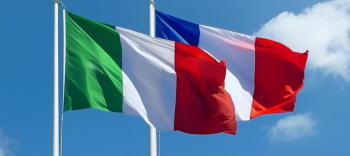
Comparison of the energy market between France and Italy: challenges and perspectives
The energy market is currently at the heart of global economic an...

Energy Transition for Banks: A Dual Challenge of Energy Efficiency, Both In-House and for Clients
Faced with climate change and new regulatory demands,...

Datanumia Launches New AI-Powered Calculation Engine to Accelerate Residential Energy Transition
Leveraging household energy consumption data unlocks ...

The choices which enable us to manage data from 12 million meters
The Datanumia team is driven by a mission to secure a more sustainable future for the...

The Guide to Big Data
Big Data is a quintessential tech word, and it sparks interest every time. The used data comes from social networks (photos, soun...

The IPMVP certification
These initials stand for the International Performance Measurement and Verification Protocol. Through measurements and verifica...

how to reduce daily energy consumption?
Eco-gestures are deliberate actions to reduce energy consumption – electricity, water, heating – and CO2 emissi...

A Guide to AI: Artificial Intelligence
AI technology, short for artificial intelligence, uses algorithms to carry out digital tasks. An artificial inte...

All you need to know about smart energy in buildings
Smart energy includes all of the technological and human solutions needed to achieve energy perfor...

Leveraging data to improve customer engagement
An interview with Julien Belhoste, Head of Marketing & Sales at Datanumia. How do you leverage all t...

A guide to the Internet of things (IoT)
IoT is short for the Internet of Things. At first glance, it relates to connected objects as a whole; which, a...

The mandatory energy audit
In terms of energy efficiency, two major standards currently coexist in France: one is compulsory and the other is not, but ...